
Liverpool Cathedral
Liverpool Cathedral celebrated its centenary year in 2024. As part of its commemorations, the Cathedral looked further at its contested heritage and uncovered its connections to the Transatlantic Trade in Enslaved Africans.
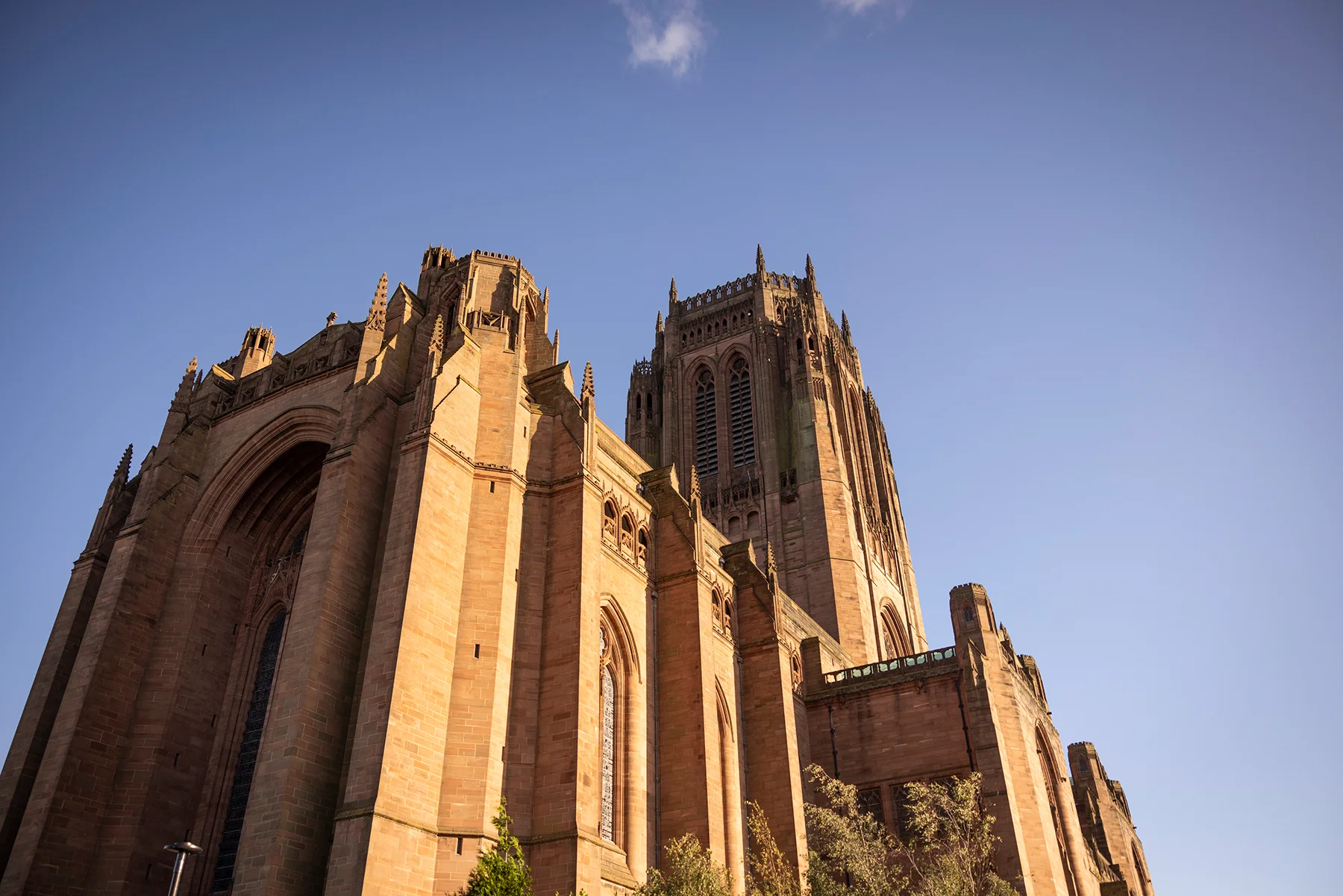
As a result of looking further into its contested heritage, Liverpool Cathedral became the first church to participate in the Diocese of Liverpool’s Slavery Truth Project – a reflective project that supports churches in responding to their connections to the Transatlantic Trade in Enslaved Africans by using creative processes.
In March 2025, A dedicated research group that consists of Cathedral volunteers, staff, guides and congregation members worked with the Racial Justice Team. Together, the group delved deeper into the Cathedral’s connections and monuments to some of Liverpool’s most prolific slave traders.
In session 3, the group completed an auto-ethnographic tour of the Cathedral. They discovered that Bryan Blundell, whose family traffickeda total of 29,679 enslaved Africans, is memorialised in the Great East Window as part of ‘the fourth light: the holy church’.
The group also explored the Lady Chapel and found out that it cost £70,000 (over £10 million in current money) to build the Lady Chapel and half the money provided came from the Earle and Langton families who were related through marriage.
John Earle owned the ship Liverpool Merchant which was the first ship from Liverpool to enter the Transatlantic Trade.
For the second half of the project, the group worked with film maker, producer and director Bea Freeman. Together with Bea, the group created a 20-minute documentary that discusses the Cathedral’s links to the Enslavement of Africans.
This creative response reflects lament, learning, and a steadfast commitment to be a Cathedral that stands for racial justice. When asked why the Slavery Truth Project is important and what motivated their participation, two group members said that:
“It [African chattel slavery] affects everybody. And therefore, I think that we’ve got to make sure that we are aware of what happened in the past”.
“Understanding racial justice more deeply has become very important. As a Cathedral, it is especially important to understand the historical impact of how the Cathedral was built and funded.”
Look out for further updates on the Cathedral’s documentary which will be available for public viewing later this year.
Liverpool Cathedral has other contested history that are beyond the scope of this project. There are opportunities for groups, academics, and community members to continue the work of uncovering these forgotten histories.